Navigation & seafaring
Reading stars, winds and currents to travel between islands and to the mainland, using instruments such as the Kamaan.
Kamaan Collective Forum is an intellectual and social compass for Lakshadweep — rooted in the islands, open to all who care for their future.
Kamaan Collective Forum is a youth-led non-profit initiative dedicated to the people and future of Lakshadweep.
Founded by young people who grew up on the islands and understand their history, culture and challenges first-hand.
Its people, heritage, environment and future — on the islands and among those studying or working on the mainland.
Working with communities, elders, educators, researchers, institutions and well-wishers from Lakshadweep, India and beyond.
Lakshadweep is an archipelago of 36 islands, atolls and reefs in the Arabian Sea, about 220–440 kilometres from the Kerala coast. Ten islands are inhabited. Though small in land area, the territory includes a vast marine environment that shapes the livelihoods, culture and identity of its people.
Most of its population belongs to indigenous communities recognised as Scheduled Tribes under the Constitution of India — with a distinct history, social institutions, languages and knowledge systems, and a close relationship with land and sea.
Became a Union Territory on 1 November, having earlier been part of the erstwhile Madras State.
Named Lakshadweep.
A single-district Union Territory administered by an Administrator appointed by the President of India, alongside elected local self-government institutions.
Over generations, island communities developed valuable knowledge and traditions. For them, the sea has always been a source of livelihood, a means of travel and a bridge to the wider world.
Reading stars, winds and currents to travel between islands and to the mainland, using instruments such as the Kamaan.
A deep understanding of reefs, lagoons, fish and seasons.
Ways of living sustainably within the limits of small islands, with careful use of land, water and coconut resources.
Island speech traditions, Mahl in Minicoy, songs, poetry and a heritage of Arabi-Malayalam writing.
Customary systems of family, inheritance, land and community life.
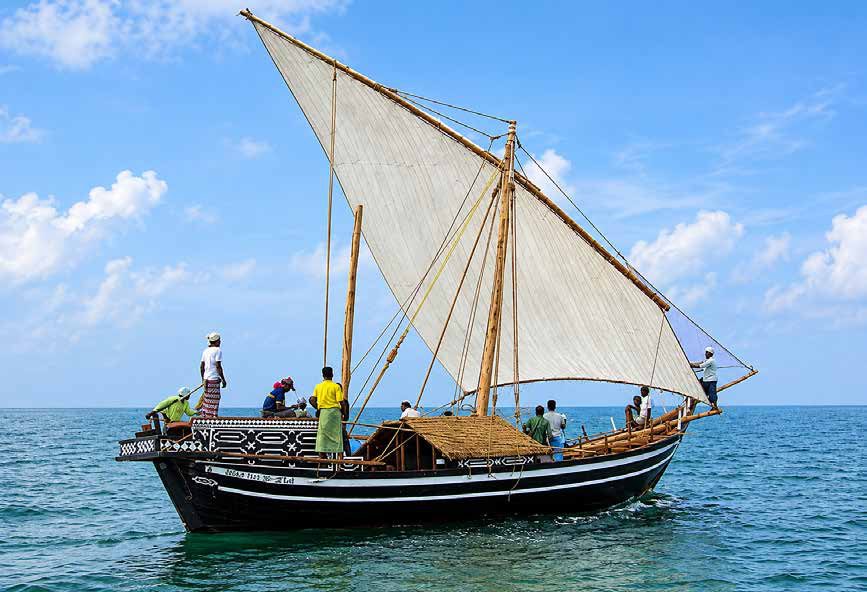
For a navigator, knowing one's position comes before choosing a direction.
The Kamaan is a traditional navigation instrument used by Lakshadweep's seafarers to find their position and set their direction at sea.
The same is true for a community: understanding its history, identity, present circumstances and aspirations helps it shape its future wisely. Kamaan Collective Forum takes its name and philosophy from this traditional knowledge. We aim to serve as an intellectual and social compass for Lakshadweep, helping people understand where they stand, appreciate their heritage and chart a direction that reflects their realities and aspirations.
Kamaan is about connection, not separation. A strong sense of identity allows communities to engage with India and the world with confidence, openness and mutual respect.
Good education helps people understand the world and also the place they come from. Kamaan creates opportunities for young people to learn about their island, Lakshadweep's administrative and political history, traditional knowledge and the social and environmental changes affecting their communities.
Much of Lakshadweep's history lives in the memories of elders, everyday experiences, songs, literature and local practices. Kamaan works to document and share this knowledge, connecting the experience of older generations with the questions and aspirations of younger ones.
People see Lakshadweep's realities from many perspectives: political, academic, administrative and personal. Kamaan provides open, respectful spaces where young people can hear different viewpoints, examine evidence, ask questions and form their own informed opinions.
Understanding challenges is the first step. Kamaan helps build the knowledge, skills and collective capacity to address issues such as educational inequality, climate vulnerability, land and justice, social inclusion and cultural preservation, in cooperation with communities, institutions and partners.
Kamaan bridges education and lived experience, history and the present, knowledge and action, and the younger generation and the society it inherits.
Initiated by young people and focused on young people, Kamaan welcomes participation from all generations and backgrounds.
An informed, empowered, equitable and sustainable Lakshadweep, where communities value their history and heritage, enjoy their rights, access meaningful opportunities and take an active part in shaping their future.
We envision a generation that is globally aware and locally grounded, confident in engaging with the world because it understands where it comes from.
To connect education, knowledge and public life with the history, culture, ecology and lived experiences of Lakshadweep.
Through youth empowerment, research, dialogue, community engagement and partnerships, we work to encourage critical thinking, preserve traditional knowledge, reduce educational and social inequalities, promote access to justice and support sustainable development.
Ten commitments that guide every programme, partnership and conversation. Hover or tap a card to read more.
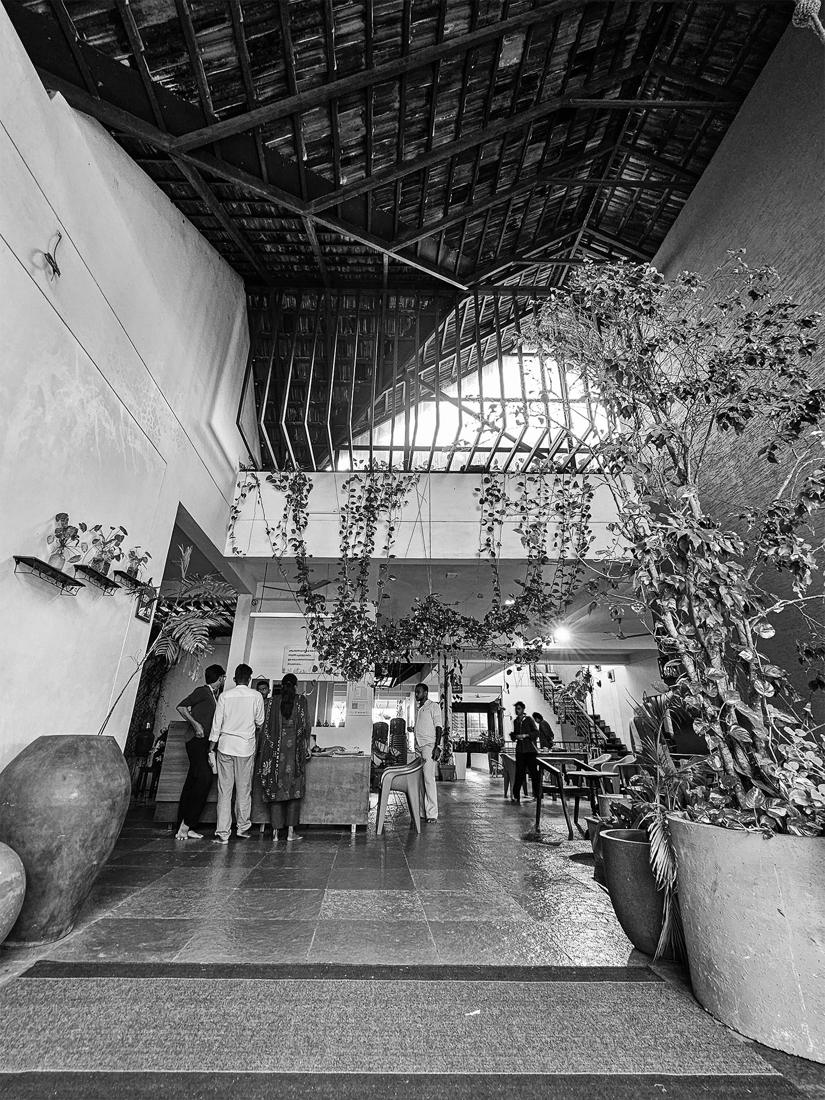
Sailing Forward: The Future of Lakshadweep
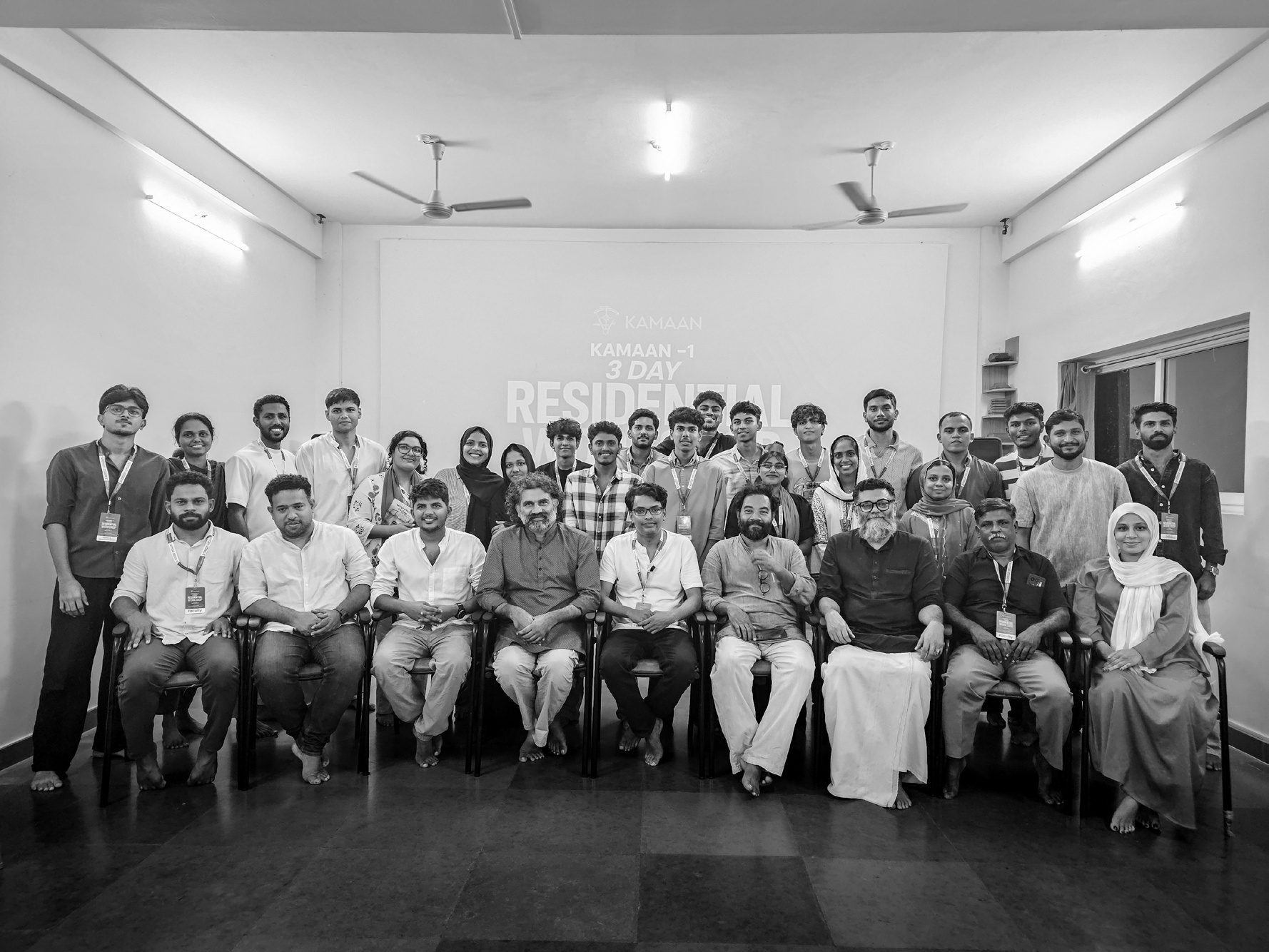
Organised by Team KAMAAN-1, the residential workshop brought together 20 students and young people from different islands of Lakshadweep who were pursuing their education on the mainland.
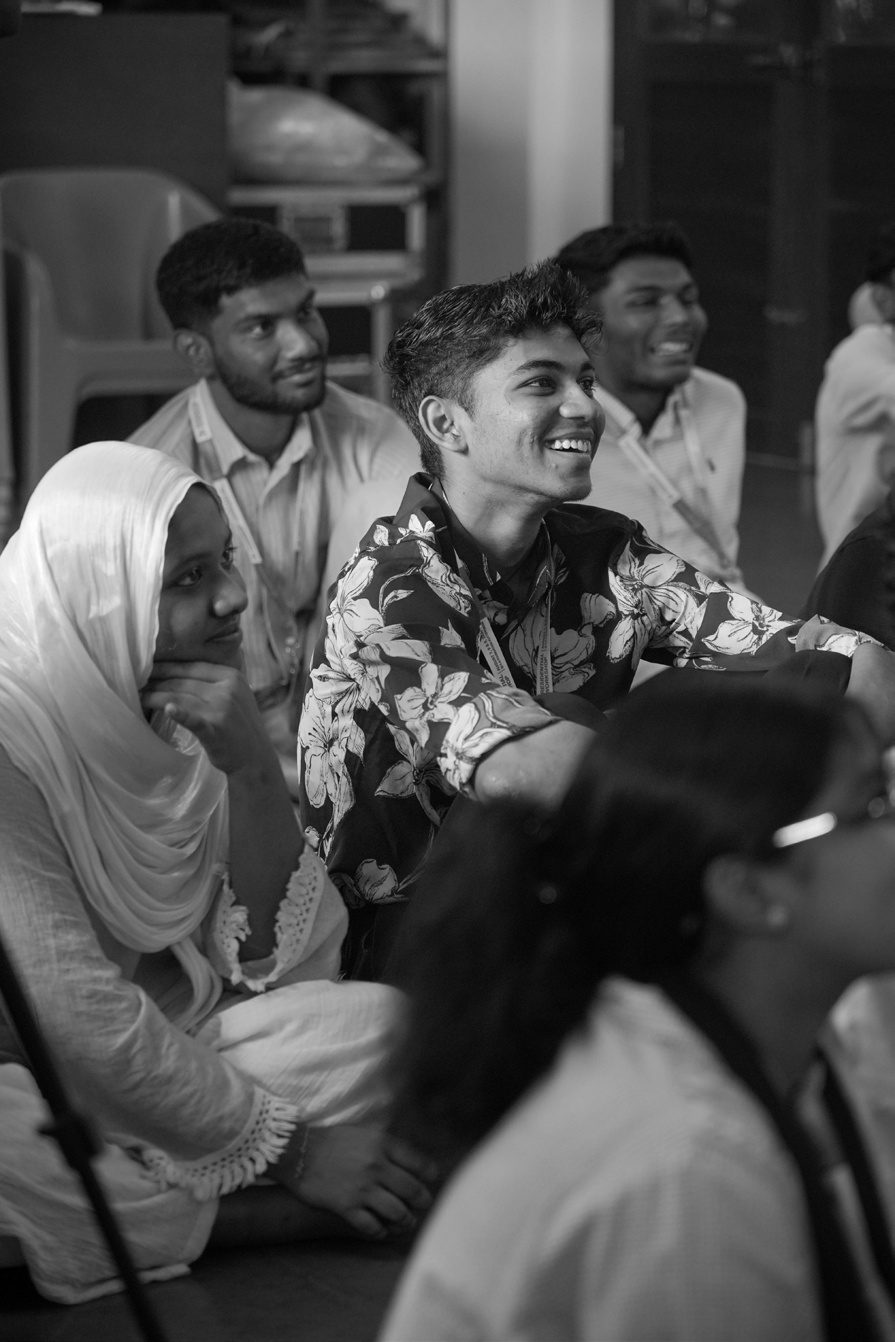
Sessions combined structured learning with interactive activities, theatre, storytelling, nature engagement, cultural programmes and discussion — helping participants see Lakshadweep as a society with a distinctive history, identity, environment and set of challenges, and to think about their own role in its future.
Historian and academic Alikutty Beeranchira introduced the pre-independence history of Lakshadweep. Writer Ismath Hussain explored the history of its literature and the role of songs in preserving cultural memory.
Research scholar Zahid Shanu introduced the history and cultural significance of Arabi-Malayalam. Sessions on post-independence history, facilitated by Salahuddeen Peechiyath and Mahada Hussain T. I., connected historical developments with the evolution of governance in the islands.
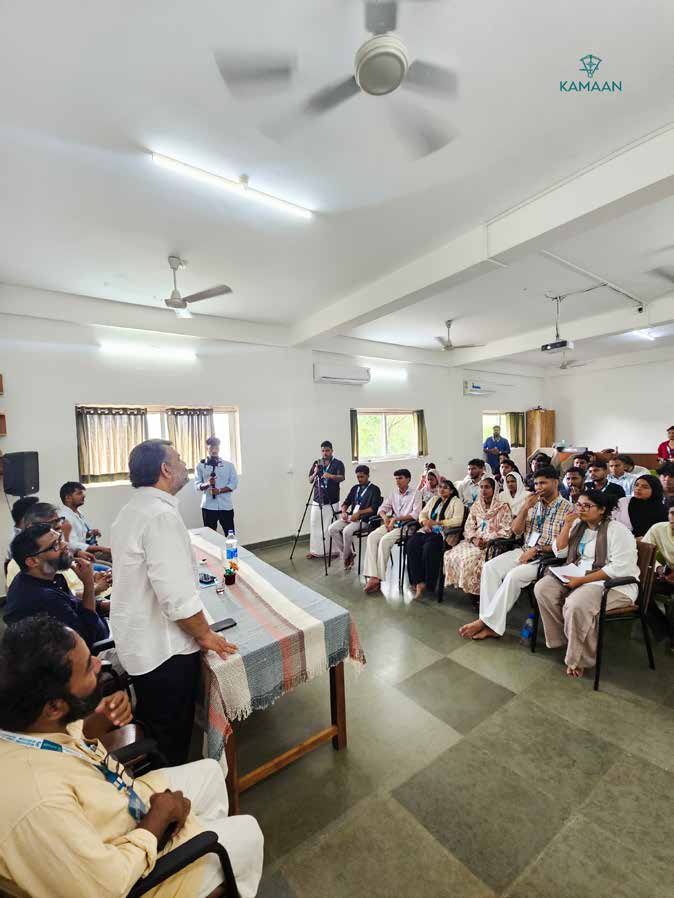
A session on the Lakshadweep Administration explained how the Union Territory is structured and governed. The inauguration was attended by Adv. Hamdulla Sayeed, Member of Parliament for Lakshadweep, and Dr. Mohammed Sadik, former District Panchayat Member.
Adv. Ajith G. Anjarlekar led a session on Pandaram land and the related ongoing litigation, introducing an important contemporary issue for the island community.
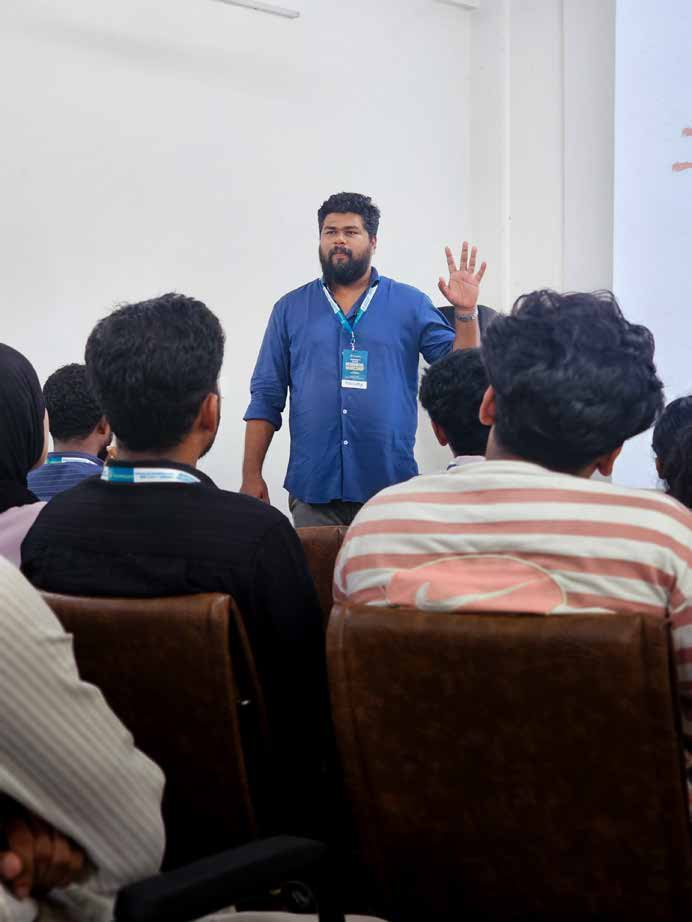
A. L. Badush, Programme Coordinator at the Nature Conservation Foundation, spoke about pride in Lakshadweep's identity and the environmental challenges facing the islands, with particular attention to coral bleaching.
Nature-based activities encouraged participants to observe their surroundings and reflect on the link between environment and community life.
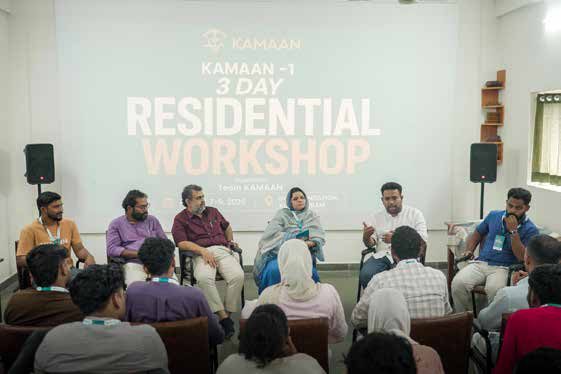
Dr. Shameena, Senior Scientist at ICAR–Indian Institute of Spices Research, led a session on research pathways, scholarships, fellowships and careers. Creative storytelling with Sabith P. K. and Theatre of the Oppressed with M. Noushad encouraged reflection through participatory methods.
A concluding panel — Farisha Teacher, Mahaboob Khan, Salahuddeen Peechiyath, Dr. Mohammed Sadik, Ismath Hussain and Sabith P. K., moderated by Mahada Hussain T. I. — discussed the future of Lakshadweep.
KAMAAN-1 was the first voyage of a collective journey, sailing forward with an understanding of where Lakshadweep has come from and a shared vision for where it can go.
Seven streams of work that turn understanding into collective action.
Residential workshops and learning camps on Lakshadweep's history, society, culture, education and present-day challenges.
Conversations with scholars, educators, researchers, community leaders, practitioners and traditional knowledge holders.
Oral histories, community research, learning resources and documentation of traditional knowledge and island life.
Mentoring, career guidance, educational assistance, coaching, scholarships and skills development.
Community welfare, social inclusion, gender equality, legal awareness and access to opportunities.
Marine conservation, ecological awareness, climate resilience and sustainable island development.
Discussions, publications and public engagement that connect knowledge with community action.
Kamaan Collective Forum aligns its work with the United Nations Sustainable Development Goals.
Inclusive education that reflects local realities
Equal opportunities and participation for women and girls
Sustainable management of the islands' limited freshwater
Removing barriers to inclusion and opportunity
Resilient, community-centred development
Responsible resource use and waste management
Building awareness and resilience in low-lying island communities
Protecting coral reefs, lagoons and marine biodiversity
Legal awareness, justice and meaningful public participation
Every project is a step towards a Lakshadweep that learns, thinks critically and acts collectively. Partner with us or support a project.
Led by young people from Lakshadweep — with a work that belongs to everyone who cares about the islands.
We welcome students, young professionals, educators, researchers, elders, community members, volunteers, institutions, donors and well-wishers — from Lakshadweep and from anywhere else.
You can mentor a student, record an elder's memories, support research, help preserve traditional knowledge, organise a discussion, contribute to an environmental initiative or partner with us on a programme.
“A compass does not choose the destination for the traveller. It helps the traveller understand the direction.”